Device
NuroSensor
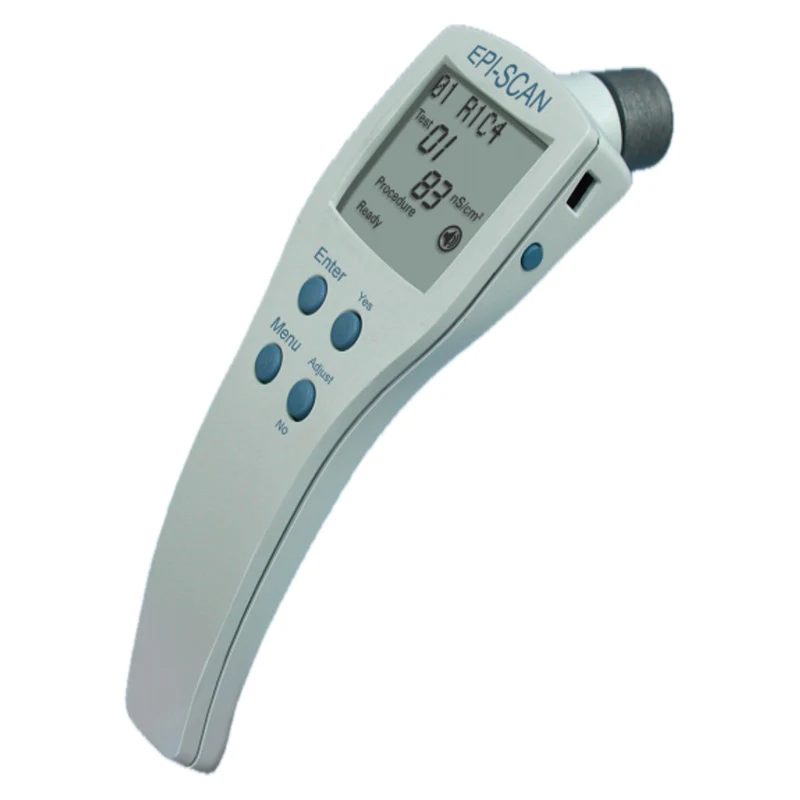
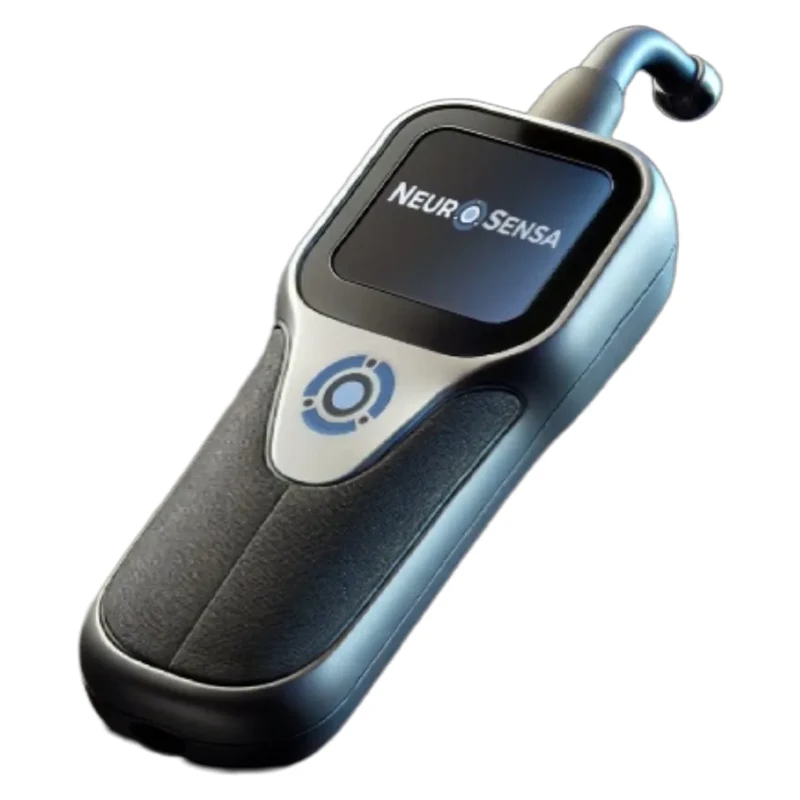
A handheld medical device that measures electrodermal activity (EDA), a physiological marker of pain, at specific anatomical sites.

Objective clarity with confidence
Selective tissue response analysis tools that measure electrodermal activity, a physiological marker of pain, and turn it into a 3D map clinicians can see, track, and document.
The problem
Pain is the number one reason people seek medical care. Yet despite decades of research, the patient-reported pain scale remains the most widely used assessment method in human and veterinary medicine. It is subjective and vague, and it can lead to:
Objective assessments of pain are desperately needed.
The solution
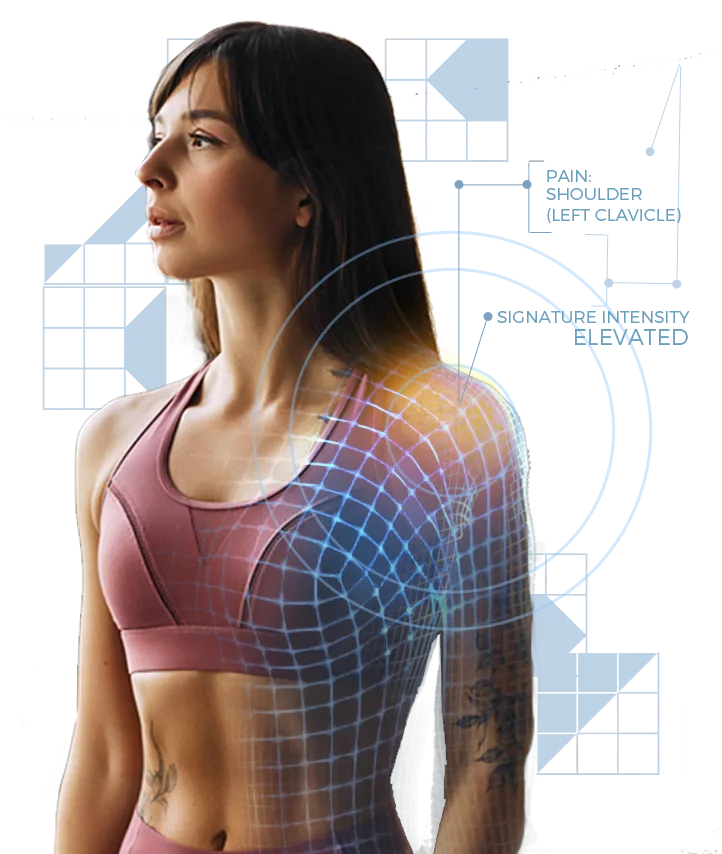
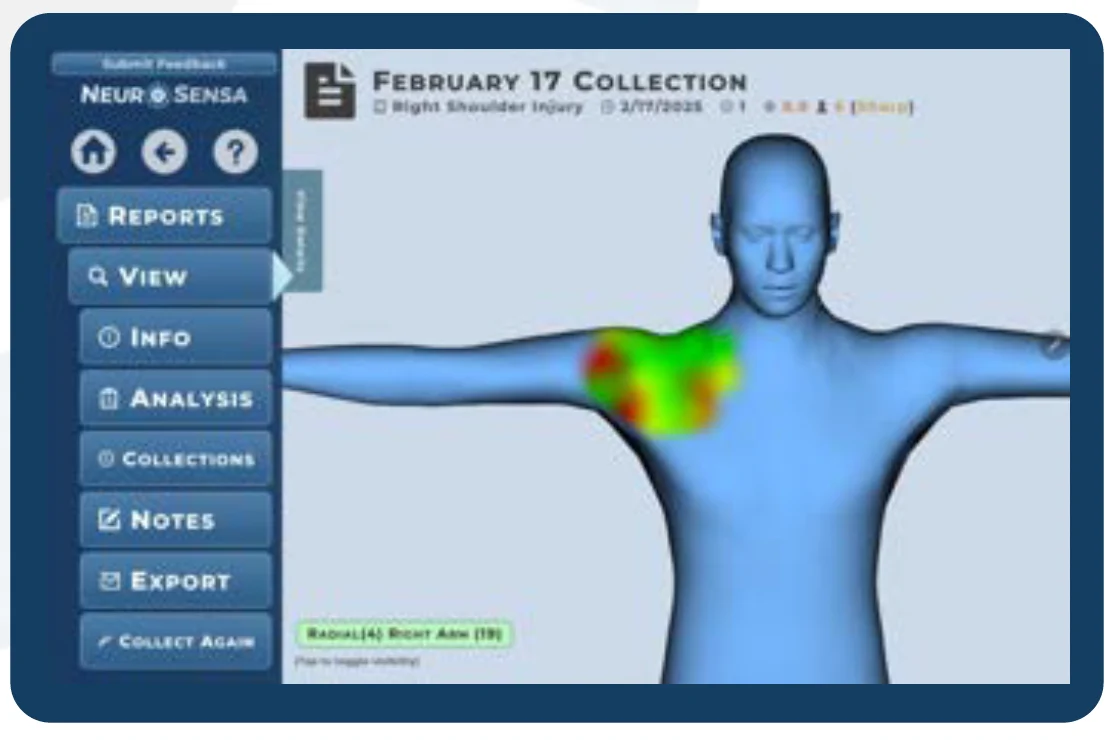
NeuroSensa uses portable, non-invasive devices that measure skin conductance, which reflects sympathetic nerve activity. Readings are processed by machine-learning algorithms and shown as a dynamic 3D view of pain areas, so clinicians can adjust treatment in real time and reach faster, more accurate diagnoses.
To empower clinicians and patients with objective, real-time insights that precisely measure and manage pain.
We bridge the gap between subjective pain reports and objective physiological signals, delivering clarity, confidence, and care at the point of need.
Device
A handheld medical device that measures electrodermal activity (EDA), a physiological marker of pain, at specific anatomical sites.
Software
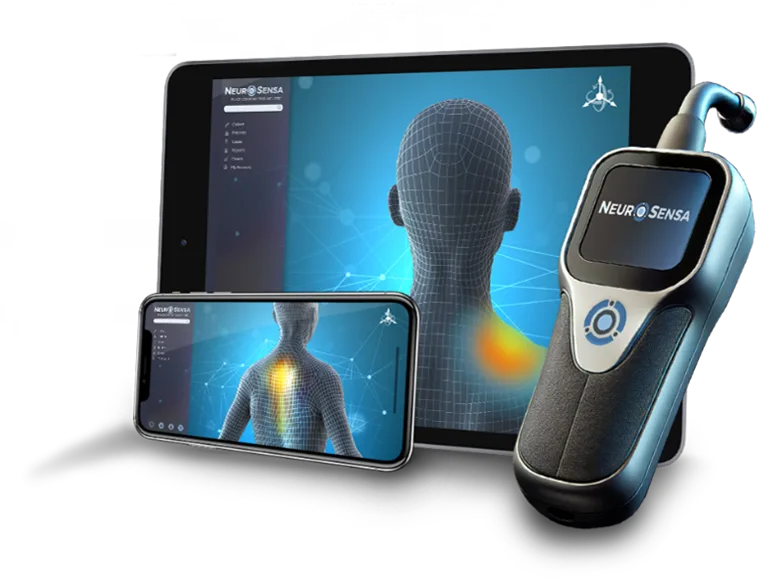
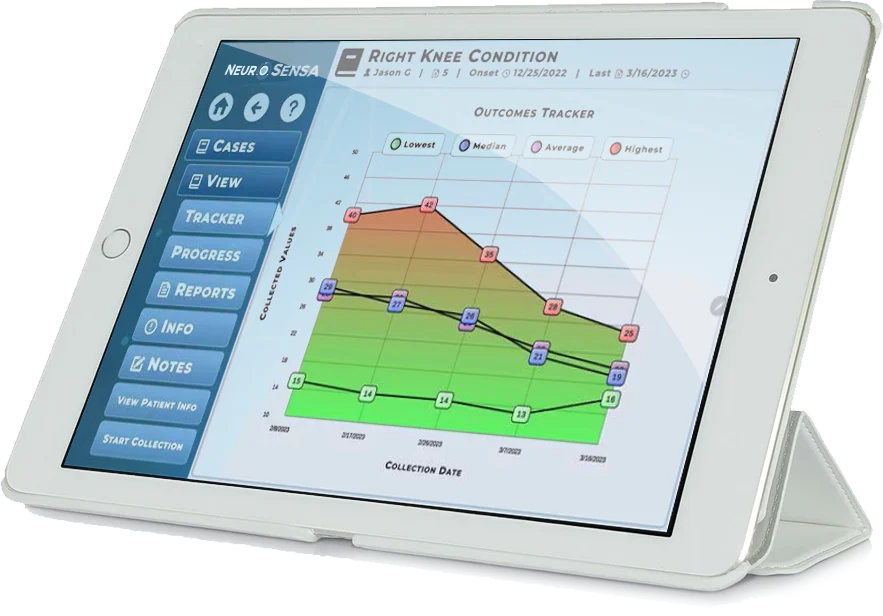
A cloud-based platform that visualizes pain in real time on a 3D body map, tracks recovery, and generates reports.
Reports
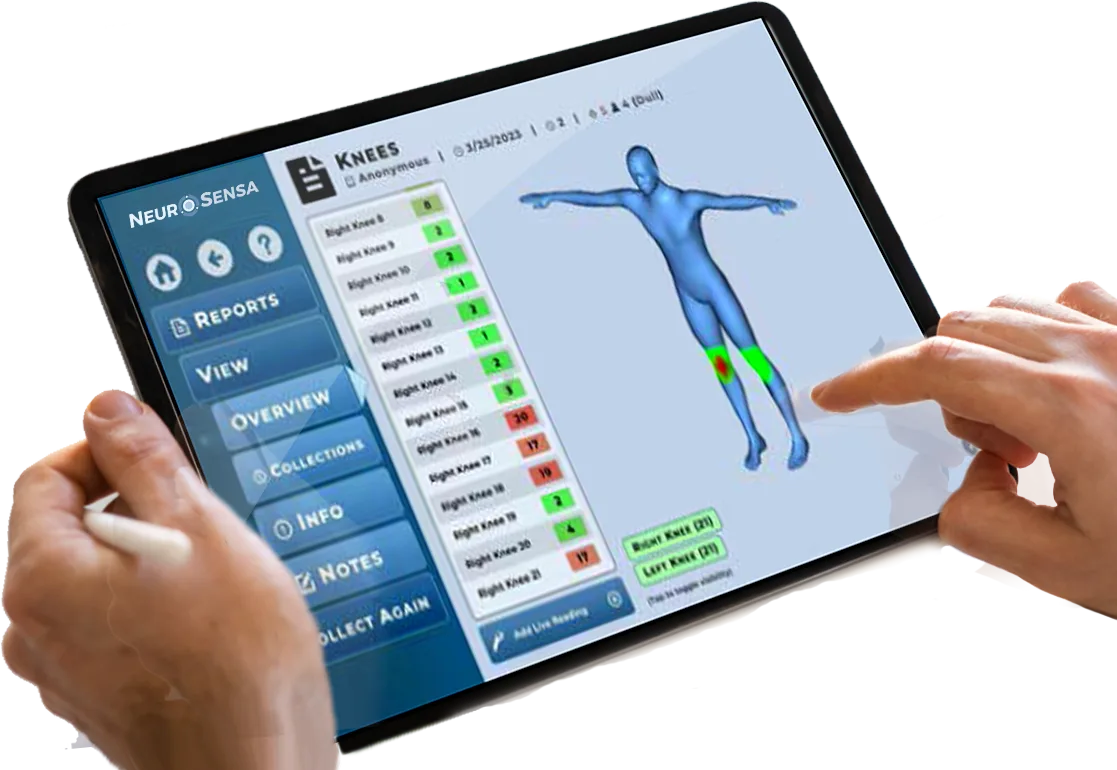
The readings from the device display in real time on a 3D representation of the human body in the software. Within seconds, the results are processed and rendered into a visual representation of a patient's pain.
Users can create custom calibration templates and workflows. For example, a knee surgeon can create bilateral knee templates to optimize collection and workflow in clinic.
The platform
X-rays and MRIs are expensive, require large equipment, can involve radiation, and capture pain at a single moment. NeuroSensa's P-Series devices are portable, cost-effective, and non-invasive. Paired with the platform's visualization and AI analytics, they produce objective reports that let clinicians adjust treatment on the spot.
Each visit adds data to the patient's record. Clinicians can review trends such as averages, medians, and ranges across visits, compare device readings with patient-reported pain, and see improvements or setbacks clearly. Customizable workflows and system integrations fit the platform into existing practice.
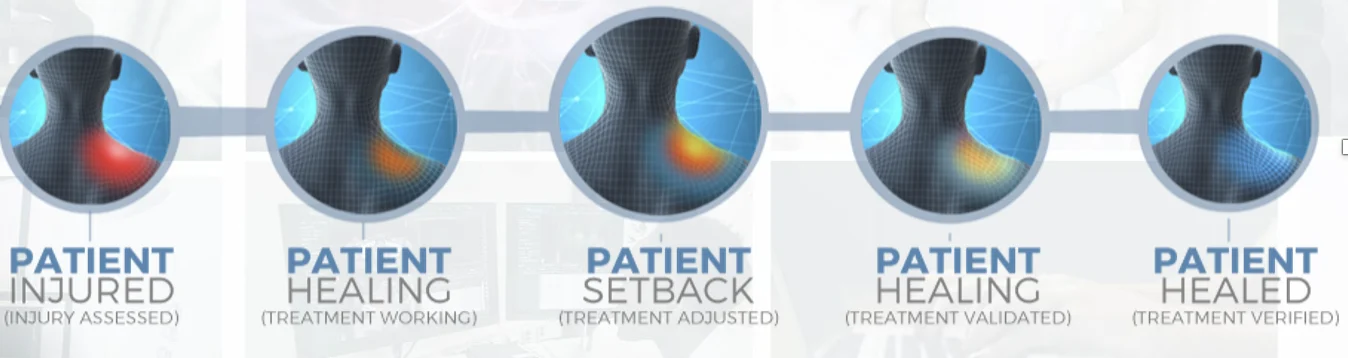
Pain experience fluctuates across the recovery timeline. Traditional imaging devices are only able to capture that experience at single, isolated points in time. With the NeuroSensa device, clinicians have the ability to capture, track, and evaluate a patient's pain experience across the entire recovery timeline, allowing treatments to be dynamically adjusted based on real-time feedback.
A cutting-edge, cloud-based Software-as-a-Service (SaaS) platform that seamlessly integrates with NeuroSensa's medical devices, connected via Bluetooth.
The platform facilitates the aggregation, analysis, and reporting of patient data to generate actionable clinical insights. Designed with enterprise scalability in mind, it supports tens of millions of patients, paving the way for transformative advancements in medical practice.
Competitive edge
Most tools read conductance at the wrist or finger. We scan specific anatomical sites.
Point-of-care use in clinics, legal settings, and employer facilities.
Real-time 3D visualization, AI insights, and blockchain-backed documentation.
Built on a 510(k) Class II device, with 600+ legal cases and a 100% admissibility record.
The research
NeuroSensa has run multiple studies measuring skin conductance in patients with a range of pain conditions. Results consistently showed increased conductance in painful regions that correlated with patient-reported pain, including in nerve injuries and post-surgical pain.
01 · Validation
A 30-year-old woman with persistent pain (3/10) after an L4–L5 lumbar discectomy was scanned with the P-100. Increased activity appeared around her spine and surgical scar. "I've never been able to visualize my pain like this," she said. The result validated her experience and guided further treatment.
02 · Confirmation
A woman with five years of right-clavicle achiness and spasms after a golf-ball injury had inconclusive X-rays and MRIs and reported 0/10 pain. The platform detected increased activity over her right clavicle and neck muscles, confirming an injury other imaging had missed.
03 · Legal
A patient developed reflex sympathetic dystrophy (RSD) after a saphenous nerve injury, which Workers' Compensation disputed. The platform provided objective evidence confirming the diagnosis and supporting spinal cord stimulation. The patient won a six-figure settlement.
04 · Actionable insight
A runner had pain on the side of his knee. Scanning showed the true source was above the knee. Targeted treatment, including acupuncture above the knee, brought significant relief, and he ran a marathon pain-free.
A case-control study found increased skin conductance in painful areas among patients with neck and shoulder pain compared with healthy controls. A 150-subject proof-of-concept study confirmed the link between conductance fluctuations and reported pain. A controlled trial in craniofacial pain showed reduced conductance after targeted treatment, and another study found higher conductance at prior injury sites.
Dr. Chris Dougherty, Orthopedic Surgeon
Dr. John Ellis, Occupational and Legal Medicine
Beyond human medicine
Horses can't say where it hurts. EquiMap applies electrodermal pain and injury mapping to equine care, helping veterinarians find and track problems sooner. Visit the EquiMap site to learn more.
 Visit EquiMap →
Markets and partnership
NeuroSensa leverages integrated hardware and software solutions to identify potential health risks, driving toward a future where comprehensive health monitoring is standard in every home.
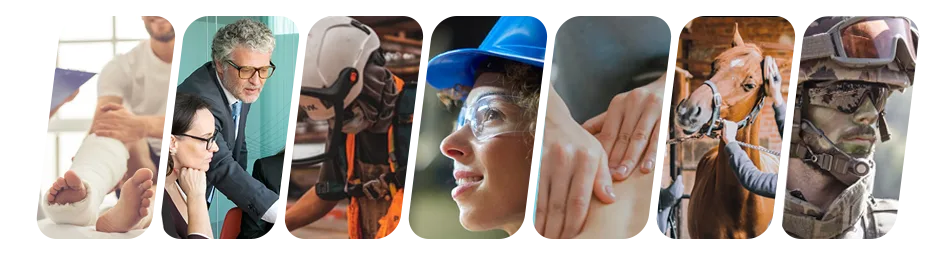
On-site assessment for workforce injury prevention and recovery, starting with an enterprise employee-wellness pilot.
Pain clinics, orthopedics, chiropractic, and physical therapy.
Supports claim validation and injury documentation.
Contact
Clinicians, employers, legal professionals, and investors: let's talk about bringing objective pain assessment to your work. Send us a message and we'll reply by email.
NeuroSensa LLC